
When a tooth is badly damaged or missing, there are several ways to restore it. Crowns, bridges and dentures are the most common, and each solves a different problem. Understanding the differences helps you make a confident choice with your dentist.
Crowns
A crown is a custom-made cap that fits over a damaged tooth completely, restoring its shape, strength and appearance. It is a good choice in several situations.
- A tooth with a large filling or a lot of decay that cannot be repaired with a filling alone.
- A tooth that has had a root canal and needs protection from breaking.
- A cracked or worn tooth that needs support.
- A misshapen or heavily discoloured tooth that you want improved.
- The final restoration on top of a dental implant.
Crowns can be made from porcelain, zirconia, metal or a combination. Porcelain and zirconia are popular because they can be matched closely to the colour of your natural teeth. Making a crown usually takes a preparation visit, where the tooth is shaped and scanned, and a fitting visit for the finished crown.
Bridges
A bridge replaces missing teeth by joining an artificial tooth, called a pontic, to crowns on the teeth either side of the gap. The bridge is fixed in place, so you do not remove it. The teeth at each end must be strong enough to carry the extra load, and they need to be shaped to hold the crowns. Bridges restore chewing and appearance, and stop neighbouring teeth from drifting into the space.
Dentures
Dentures are removable replacements for missing teeth.
- Partial dentures fill gaps while keeping your remaining teeth. They clip gently onto existing teeth for support.
- Full dentures replace all the teeth in the upper jaw, the lower jaw or both, and rest on the gums.
- Modern dentures are made from acrylic and sometimes metal, and are shaped and shaded to look natural.
New dentures take time to get used to. Eating and speaking may feel different at first, and small adjustments in the weeks after fitting are normal. Over the years, gums and bone change shape, so dentures need to be checked and sometimes relined or replaced.
How to choose between them
The right option depends on how many teeth are affected, the health of your remaining teeth and gums, your bite, your budget and your preferences. For a damaged tooth, a crown is often best. For a gap with healthy teeth either side, a bridge may suit. For several missing teeth, a partial or full denture may be more practical. Dental implants are another option worth discussing, and your dentist can explain how they compare.
The benefit of an on-site dental lab
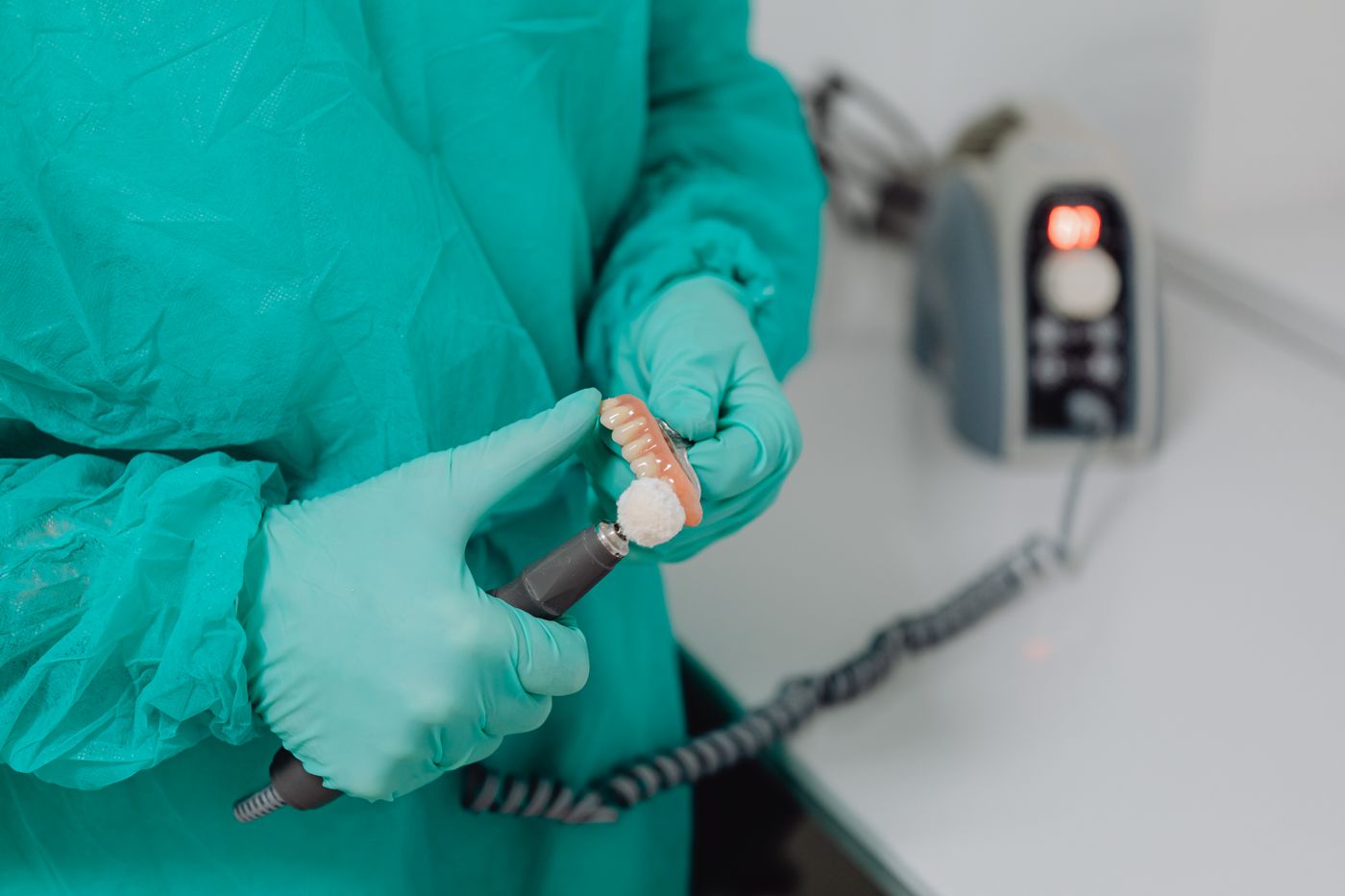
Because our dental lab is on site, the clinician and the technician plan your case together. Colour, shape and fit can be checked and refined while you are in the chair, which reduces delays and helps the result look and feel natural.
Caring for your restoration
- Brush morning and night and clean between your teeth every day, taking particular care at the edges of crowns and under bridges.
- Remove and clean dentures daily, and leave them out overnight unless your dentist advises otherwise.
- Avoid biting very hard objects such as ice, hard sweets or pen lids.
- Attend regular check-ups so the fit and the health of the surrounding teeth and gums can be monitored.
With good care, crowns and bridges often last 10 years or more, and many last much longer.